About this template
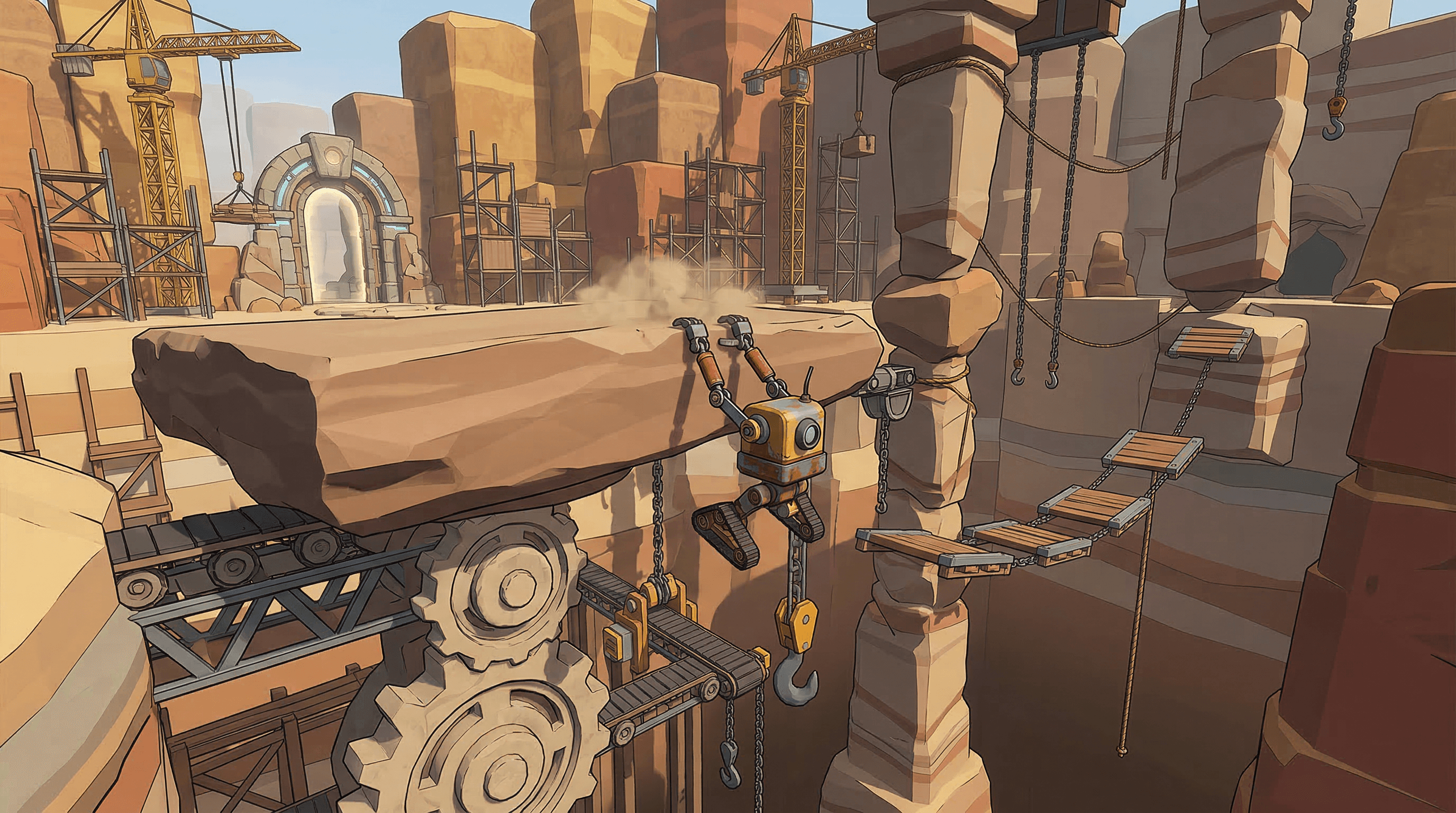
Build a game where the physics simulation creates situations the designer did not specifically script. A boulder rolls downhill and clears a path the player was about to fight through. A platform they overloaded collapses. The rope bridge they are crossing sways under them. Physical simulation as gameplay.
Summer Engine helps you build that system through conversation. Describe the physical interactions you want to enable, the environment that creates interesting physics scenarios, the player capabilities that interact with simulation. The AI sets up Godot's physics in the configuration that makes your design intentions work.
Physics platformers succeed when the simulation feels honest. Objects behave in ways players can predict from real-world experience, then the game designs around those behaviors. Players who understand physics have tools the level design rewards. That implicit skill expression is what makes the genre compelling.
Who it's for
- Developers who want emergent gameplay from physical systems rather than scripted events.
- Designers interested in environmental physics as puzzle and traversal tools.
- Teams inspired by Human Fall Flat, Totally Accurate Battle Simulator, or Getting Over It.
- Anyone building a comedy physics game or a serious physics-based puzzle traversal.
Highlights
Physics Puzzle Traversal
Build environments where physical objects are tools: move boxes to reach ledges, use momentum to cross gaps, stack items to climb.
Ragdoll Comedy
Design a comedy game built on the gap between what players intend and what the physics produce. Human Fall Flat-style human simulation.